Comparison
Wall mounted vs inset vs freestanding electric fires
Wall mounted, inset, media wall and freestanding electric fires compared: suites, TV stands and stoves, with fitting, looks, heat and the rooms each suits.
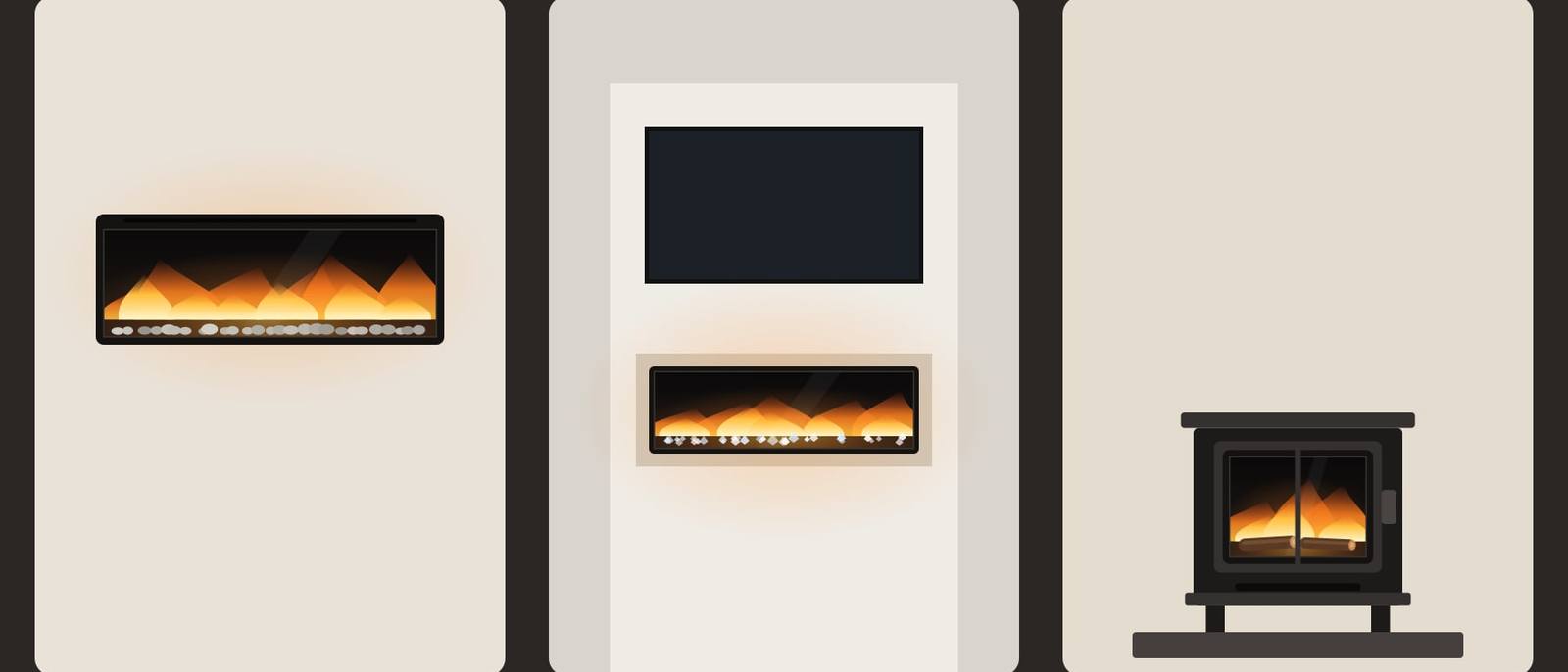
There are three basic ways to have an electric fire in a room: on the wall, in the wall or standing in front of the wall. Within those you will find wall mounted fires, media wall fires, fireplace insets, fire suites, TV stands with a fire and electric stoves. They all heat in much the same way, so the choice is mostly about your room, how much building work you want, and the look you are after.
The types at a glance
| Type | Where it goes | Fitting | Best for |
|---|---|---|---|
| Wall mounted | On the wall surface, on a bracket | Fix bracket, plug in | Rooms without a chimney breast, quick upgrade |
| Media wall (inset) | In a recess in a stud wall | Build recess, plan power | New feature walls under a TV |
| Fireplace inset | In an existing fireplace opening | Slide in, plug in | Period homes with a fireplace |
| Fire suite | Against a flat wall, on the floor | Assemble, plug in | A traditional focal point without a chimney |
| TV stand with fire | Against a wall, TV on top | Assemble, plug in | Modern living rooms, extra storage |
| Electric stove | On a hearth, in a recess or corner | Stand, plug in | Wood burner look without a flue |
Wall mounted electric fires
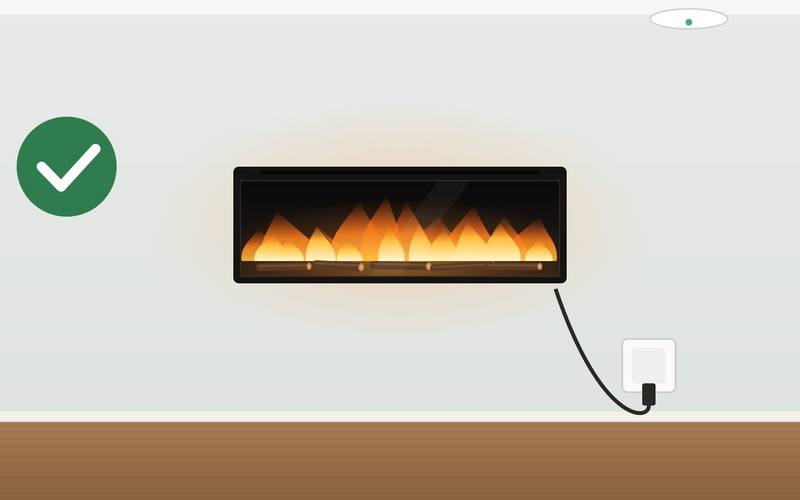
A wall mounted fire hangs on a bracket like a flat-screen TV. It is a slim box with a glass front, usually black, and a heater vent at the top or bottom.
Good points
- No chimney, flue or recess needed, so it works on almost any wall.
- Quick to fit: screw the bracket to the wall, hang the fire, plug it in.
- Wide choice of sizes, from compact to 70 inches and more.
Watch-outs
- The cable shows unless you run it inside the wall, which means new cable routes and possibly an electrician.
- It needs a wall that can take the weight with the right fixings, especially plasterboard.
- If you want a TV above it, check the clearance in the fire's manual.
See wall mounted electric fires.
Inset and media wall fires
An inset fire sits inside a recess so that only the glass and trim show. There are two quite different kinds.
Media wall fires are long and slim, built into a timber or metal stud wall, usually under a TV recess. They can be front facing or have glass on the ends as well (three sided). They give the cleanest, most built-in look of any electric fire.
Fireplace inset fires are smaller and squarer. They are made to slot into an existing fireplace opening. The standard UK fireplace opening is 16 inches wide and 22 inches high, and many inset electric fires are made for it. You keep your surround and hearth and replace a gas or solid fuel fire, or fill an empty opening.
Good points
- Flush, built-in finish with no visible cable.
- A media wall can hide TV cables, add storage and lighting.
- Fireplace insets make use of a fireplace you already have.
Watch-outs
- Only use fires the maker says can be recessed, and build the recess to the dimensions in the manual. Our media wall buying guide explains how.
- A media wall is a building project: framing, boarding, plastering and planning the power. Some of the electrical work may need a registered electrician; see installing a media wall fire safely.
- For a fireplace inset, measure the opening's depth as well as width and height, and think about the open chimney above.
See media wall and inset fires.
Freestanding electric fires
Freestanding fires stand on the floor and plug into a socket. No building work, and you can take them with you when you move.
Fire suites combine a mantel, back panel, hearth and an inset fire. They recreate a traditional fireplace on a flat wall. Most arrive flat packed and need two people to assemble.
TV stands with a built-in fire put a fire into a low media unit with cupboards either side. They suit modern rooms and add storage. Check the stand's load limit against your TV's weight.
Electric stoves look like a wood burner and stand on a hearth, in a recess or in a corner. They are covered in detail in our electric stove buying guide.
Good points
- No fixing, no recess, no cable to hide beyond a lead to the socket.
- Easy to move to another room or another home.
- Suites and stoves give a strong traditional focal point.
Watch-outs
- They take up floor space, and suites need a reasonably long flat wall.
- Keep the area in front of the heater clear. Electrical Safety First suggests at least one metre between heaters and combustible materials such as curtains and furniture.
- Plug straight into a wall socket, not an extension lead.
See electric fireplaces and suites and electric stoves.
What is the same across all types
Heat. Most plug-in electric fires give up to about 2 kW, usually with a 1 kW setting as well. A wall mounted fire, a media wall fire and a stove of the same rating give the same heat. Use our guide to heat output and room size to check what your room needs.
Running cost. Cost depends on the kW used, not the type. At the average Ofgem price cap unit rate for Direct Debit customers from 1 October to 31 December 2026, 26.32p per kWh, full heat at 2 kW costs about 53p an hour. Details in the running cost guide.
No flue. None of them burn anything, so none need a chimney, a flue or a carbon monoxide vent for the fire itself.
Flame effects. Every type uses the same families of flame effect, most often LED. See flame effects explained.
Which type suits your home?
New build or a room without a chimney breast. A wall mounted fire is the quickest option. If you want a built-in look and are happy with a building project, a media wall.
A room with a TV as the focal point. A media wall with the fire below the TV, or a TV stand with a built-in fire if you want no building work.
A period home with an existing fireplace. A fireplace inset fire keeps your surround. An electric stove in the recess gives a wood burner look.
A flat wall where you would like a fireplace. A fire suite.
Renting, or moving soon. A freestanding fire, suite, TV stand or stove, because nothing is fixed to the building.
Small rooms and bedrooms. A compact wall mounted fire or a small stove. Low heat settings are usually enough, and Electrical Safety First advises against leaving heaters on while you sleep.
Questions to ask before you choose
- Do you want building work, a little drilling, or none at all?
- Is there a socket near where the fire will go?
- Will a TV go above or near it, and where does the fire's heat come out?
- How much heat does the room need, and is the fire's kW enough?
- Which look suits the room: modern and linear, or traditional?
- Are you likely to take the fire with you when you move?
Once you have answered those, the type usually chooses itself.
Frequently asked questions
Which type of electric fire gives the most heat?
The type does not decide the heat. Most plug-in electric fires of every type give up to about 2 kW. Compare the kW figure in the specification rather than the style.
Which electric fire is easiest to install?
Freestanding fires, suites and stoves are the simplest: assemble, stand against the wall and plug in. Wall mounted fires need a bracket fixed securely to the wall. Inset and media wall fires need a recess built to the fire's dimensions and planned power.
Can I fit an electric fire in a rented home?
A freestanding fire or stove needs no building work, so it is usually the easiest choice for tenants. Drilling into walls for a wall mounted fire or building a media wall normally needs your landlord's permission. Check your tenancy agreement.
What is the difference between an inset fire and a media wall fire?
A media wall fire is a type of inset fire. Both sit in a recess with only the front showing. Media wall fires are long and slim and go into a stud wall, while fireplace inset fires are smaller and made for an existing fireplace opening, often 16 inches wide by 22 inches high.