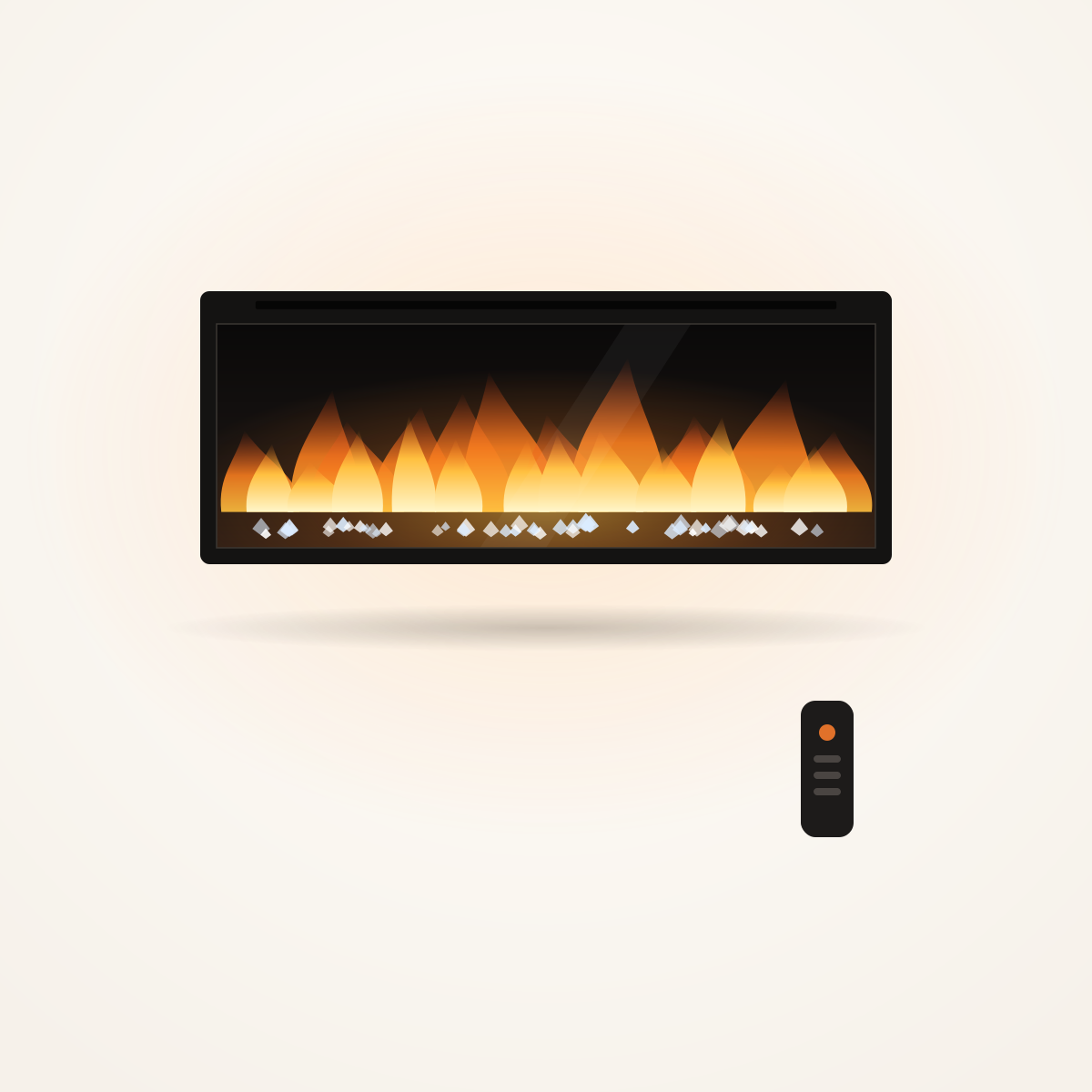
40 inch wall mounted electric fire with LED flames
40 inch Up to 2 kW LED flames 13 A plug Remote control
Available soon
3 products
A wall mounted electric fire hangs on a bracket like a TV, so it suits rooms without a chimney breast and needs no flue. Most plug into an ordinary 13 A socket and heat with a fan heater that you can switch off when you only want the flame effect.
Compare all models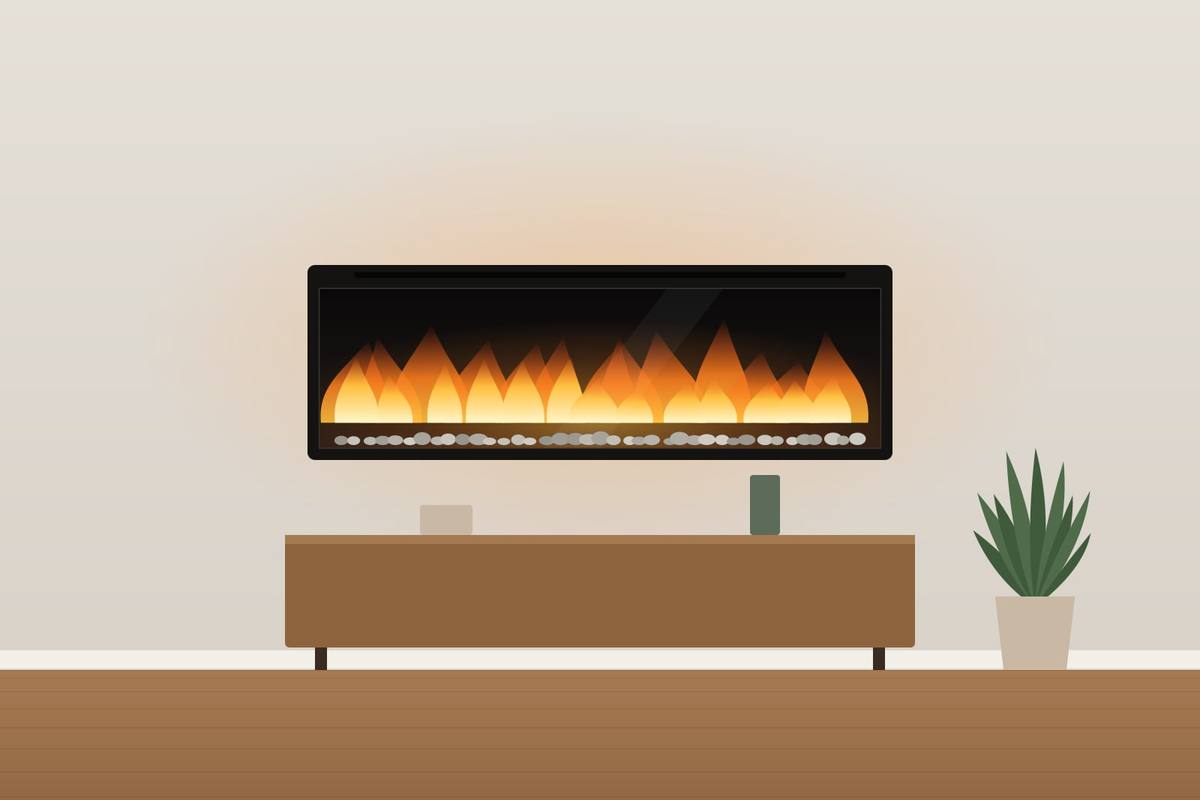
40 inch Up to 2 kW LED flames 13 A plug Remote control
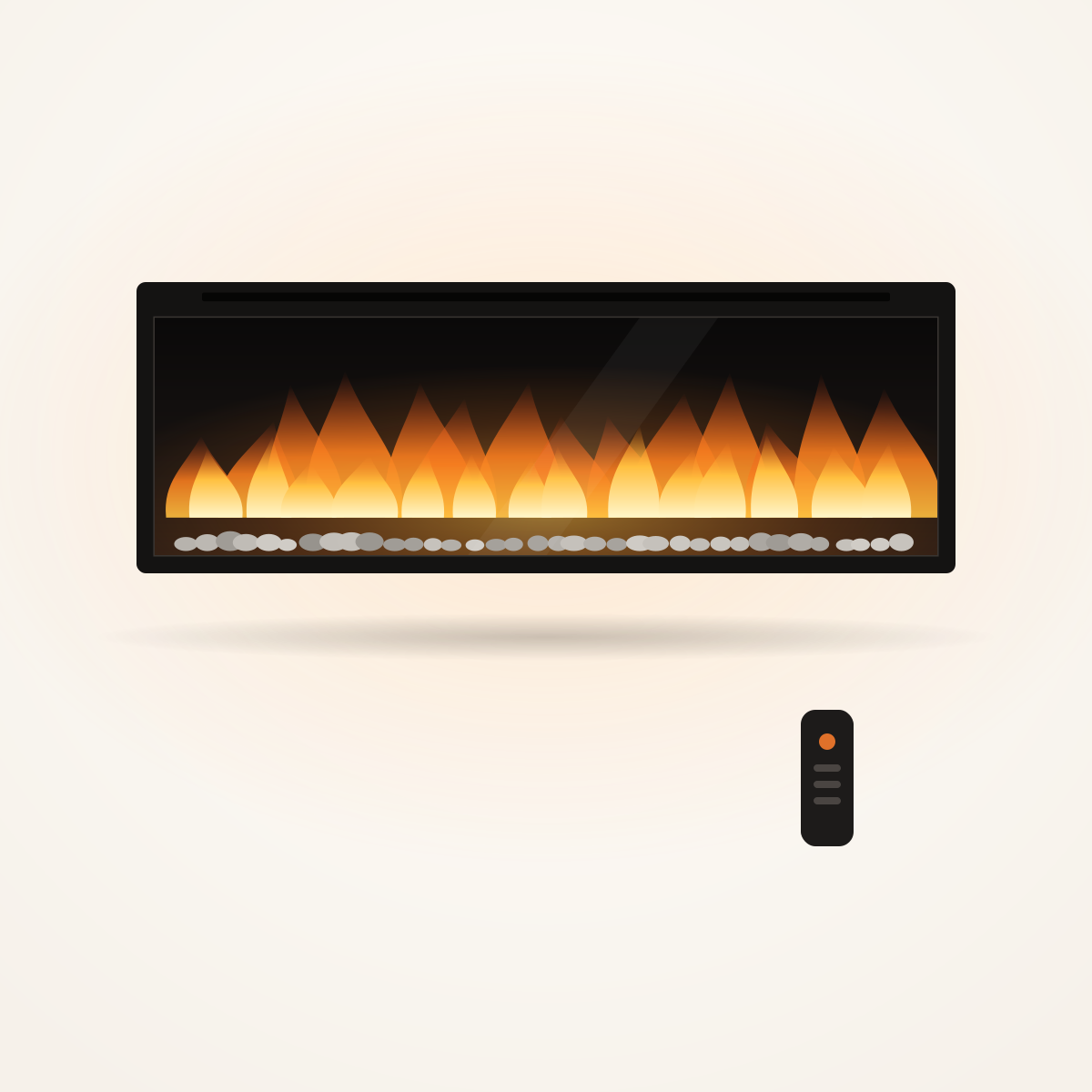
50 inch Up to 2 kW LED flames 13 A plug Remote control
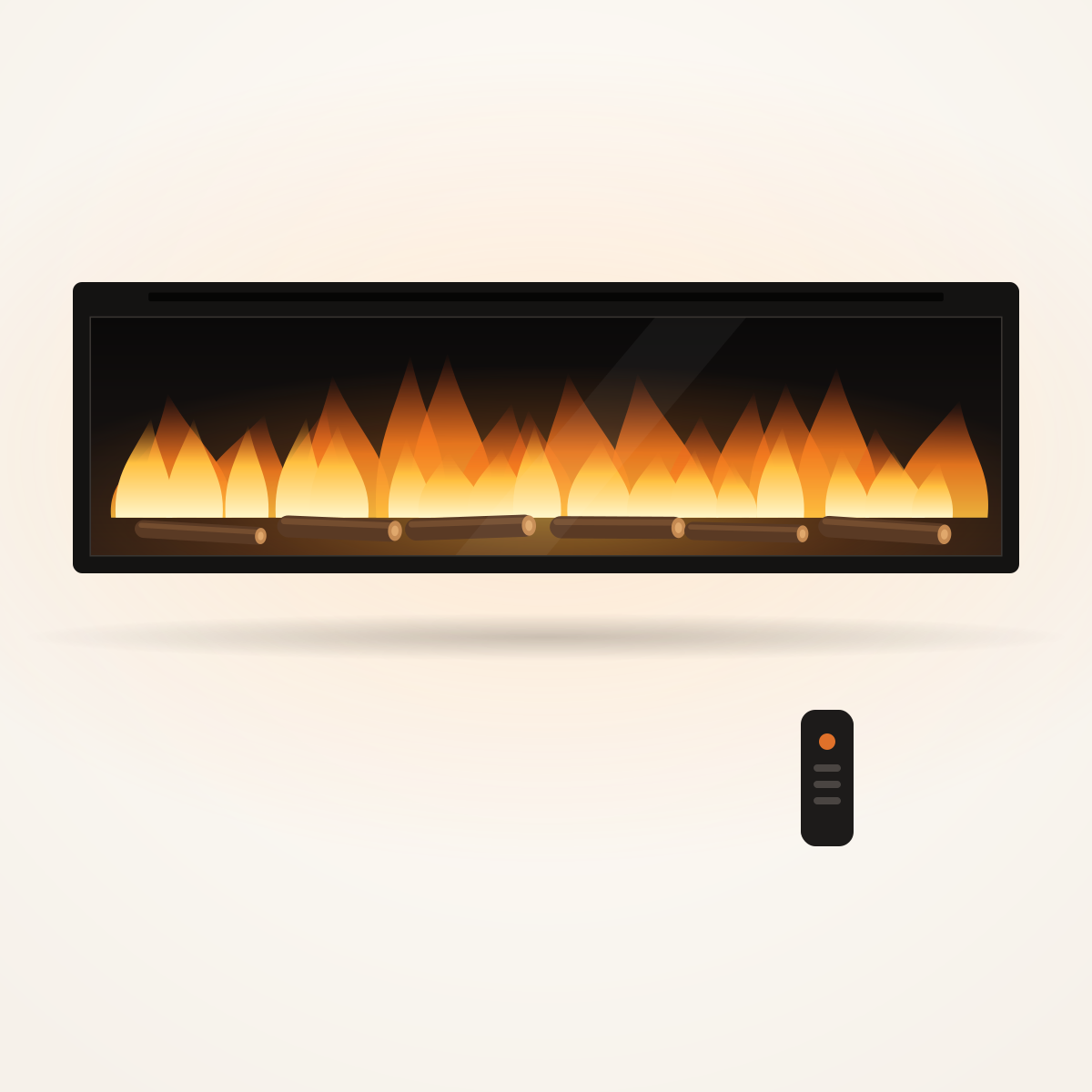
60 inch Up to 2 kW Logs or crystals 13 A plug Remote control
Width first. Wall mounted fires are sold by width in inches: 40 inch is roughly 100 cm, 50 inch roughly 127 cm and 60 inch roughly 152 cm. Measure the wall and leave space either side so the fire does not look squeezed. Centre it on the seating area rather than on the wall if the two differ.
Heat output. Most plug-in fires have two heat settings, often around 1 kW and 2 kW. That is enough to top up a typical living room, but it will not replace central heating in a large, cold room. Our guide to heat output and room size shows how to check this for your room.
Height. Hang the fire where you can see the flames from the sofa. Many people place it lower than a TV, roughly at seated eye level. If you want a TV above it, read the fire's manual for the clearance above the heat outlet.
Cable and socket. A plug-in fire needs a socket within reach of its lead. Hiding the lead in the wall means new cable runs, so plan that before you decorate. The guide installing a media wall fire safely explains when you need an electrician.
Running cost. On the highest setting a 2 kW fire uses 2 kWh per hour. Our running cost guide works through the sums with the current Ofgem price cap.
Sizing
How much heat an electric fire gives, the room volume divided by 14 rule, a table of room sizes, and what to do when your room needs more than 2 kW.
Running costs
Electric fire running costs worked out: kW x unit rate, the Ofgem price cap for October to December 2026, cost per hour and per evening, and how to cut it.
Usually yes, if the bracket is fixed with the right plasterboard fixings or into the timber studs behind the board. Check the weight in the specification and the fixing advice in the manual. For heavier fires, screwing into studs or a timber pattress is the safer route.
No. An electric fire burns nothing, so there is no smoke or flue gas to get rid of. That is why they can go on almost any internal or external wall.
On most electric fires, yes. The flame effect and the heater have separate controls, so you can run the flames on their own in autumn and spring. The flame effect alone uses much less electricity than the heater.