Safety
Are electric fires safe? A practical guide for UK homes
Are electric fires safe? The real risks, Electrical Safety First advice on extension leads, distance and overnight use, safety marks, recalls and children.
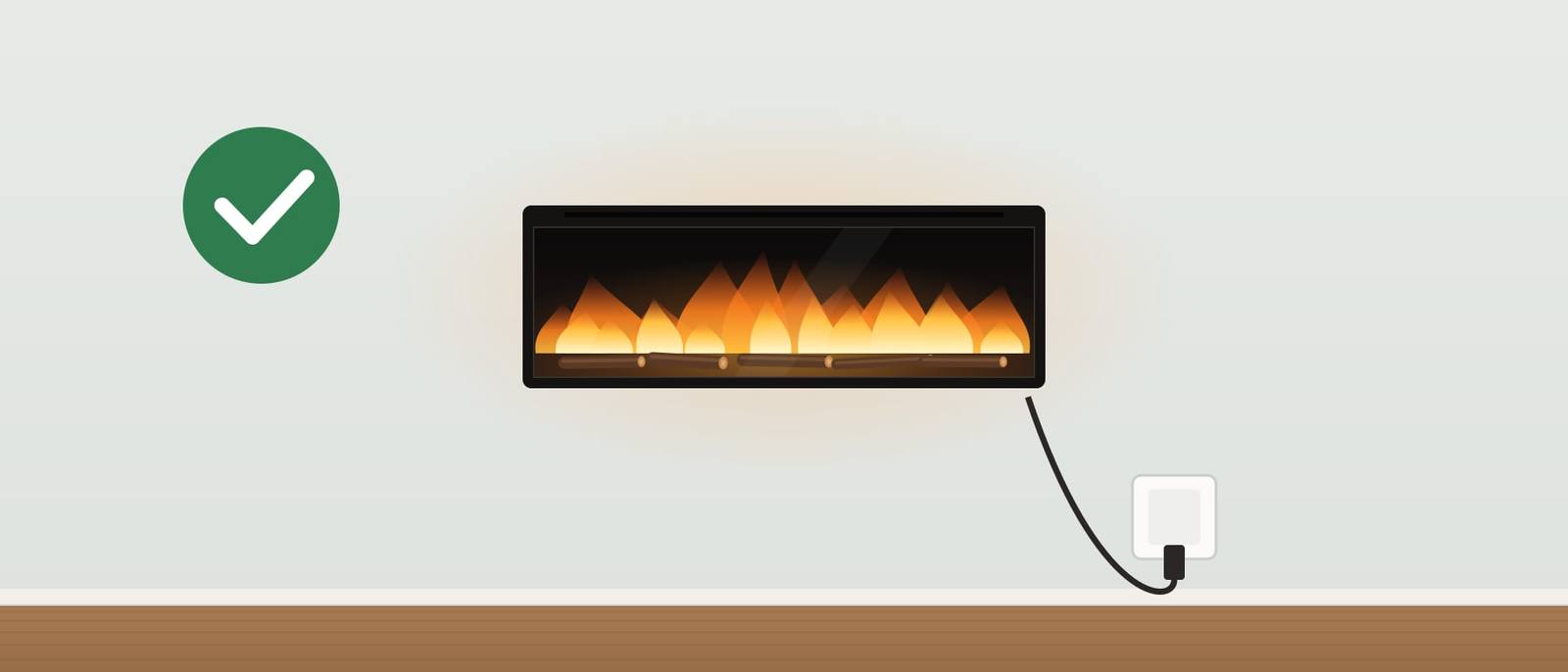
Yes, an electric fire is one of the safer ways to add warmth and a flame effect to a room, as long as you use it sensibly. It burns nothing, so there is no smoke, soot or carbon monoxide from the fire itself, and no chimney to sweep. The risks that remain are the ones that come with any electric heater: overloaded leads and sockets, heat too close to things that can burn, and heaters left running when nobody is watching.
This guide sets out those risks and what to do about them, based mainly on the published advice of Electrical Safety First, the UK charity that campaigns on electrical safety.
What makes electric fires safer than open fires
- No combustion. Nothing burns, so there are no flue gases, no sparks and no hot embers.
- No carbon monoxide. Carbon monoxide comes from burning fuel. An electric fire does not produce it, so it does not need a flue or a carbon monoxide vent. If your home has a gas boiler, gas fire or wood burner, you still need carbon monoxide alarms for those.
- No chimney fires. There is no soot or tar to build up.
- Thermostat and timer. Most modern fires switch the heater off once the room is warm and can be set to turn off at a set time.
- Overheat protection. Electric fires usually include a cut-out that switches the heater off if it overheats, for example because the outlet is blocked. Check the manual for how yours works.
The real risks, and what to do
1. Extension leads and overloaded sockets
A 2 kW heater draws a lot of current for a long time. Electrical Safety First advises avoiding powering a heater from an extension lead, because leads can easily be overloaded. Plug the fire straight into a wall socket. In a media wall, give the fire its own socket or a fused spur, never an adapter hidden in the wall.
Look out for warning signs at the plug and socket. Electrical Safety First lists burn marks, buzzing or crackling sounds, fuses blowing, circuit breakers tripping and a plug that feels hot. If you notice any of these, unplug the fire and contact the retailer, manufacturer or a qualified repairer.
2. Heat close to things that can burn
The hottest part of most electric fires is the heat outlet, where warm air leaves the fire. Electrical Safety First suggests keeping heaters at least one metre away from combustible materials such as paper, furniture and curtains, and on a level surface where they cannot be knocked over.
- Do not put a sofa, rug or cushions right in front of the outlet.
- Keep curtains clear, especially on wall mounted fires near a window.
- Never dry clothes on or near a heater. If you dry clothes in the same room, keep them well away from it.
- In a media wall, keep the clearances in the fire's manual, including the gap to a TV or shelf above.
3. Leaving it on
Electrical Safety First advises never to leave a heater unattended while in use or while you are asleep. In practice:
- Use the timer so the heater turns off before bedtime.
- Switch off at the wall when you go out.
- In bedrooms, warm the room before bed and let the timer switch the heater off.
4. Children and pets
The heat outlet and the area around it can get hot. Teach children to keep away from it, and keep the remote control out of small hands. Freestanding fires and stoves should stand where they cannot be pulled over; fire suites are often fixed to the wall with brackets for the same reason. Keep pet beds away from the outlet.
5. Water vapour fires
Water vapour flame effects use a tank of water near electrical parts. Follow the manual exactly: switch off and unplug before you refill or clean, use the water type the maker recommends, and do not overfill.
Buying a safe fire
Most problems with electrical products start with where they were bought. Electrical Safety First advises:
- Buy from a reputable retailer rather than an unknown third-party seller online.
- Avoid second-hand heaters, which may not meet current safety standards.
- Register your heater with the manufacturer, so you can be contacted if there is a safety recall.
When you look at a fire, check that:
- It has a UK 13 A plug fitted, or is designed to be wired to a fused spur.
- It carries a UKCA or CE mark. In Great Britain the government accepts either mark for electrical equipment under the Electrical Equipment (Safety) Regulations 2016.
- The manual is in English and gives clearances, installation steps and the heat output.
- It has a thermostat, a timer and, ideally, a clear indicator when the heater is on.
You can check for known problems on the GOV.UK product safety alerts, reports and recalls list.
Smoke alarms
Even with a safe fire, working smoke alarms matter. Electrical Safety First suggests at least one smoke or heat alarm on every floor, tested at least once a month.
Installation safety
Most plug-in fires need no installer. For media wall fires and hardwired fires, the wiring needs care:
- In England, a new circuit is notifiable building work under Part P and must be done by a registered electrician or notified to building control.
- Adding a socket or fused spur to an existing circuit outside a bathroom is not notifiable, but it still has to meet the wiring regulations and be tested.
- The fire must be easy to switch off without taking it out of the wall.
Our guide to installing a media wall fire safely covers this in detail.
Can you put a TV above an electric fire?
Yes, if you follow both manuals. The fire's manual gives the minimum clearance above it; your TV maker may give guidance on nearby heat sources. Fires that blow heat forwards or downwards are easier to combine with a TV than fires with a top outlet. If in doubt, leave a bigger gap.
Can you use an electric fire in a bathroom?
Only a heater designed and rated for bathrooms should go there, and in England any new electrical work near a bath or shower is notifiable under Part P. Ordinary electric fires are made for living rooms and bedrooms, not for wet rooms.
Safety checklist
- Plugged straight into a wall socket, no extension lead.
- At least one metre clear of curtains, furniture and other things that can burn, or more if the manual says so.
- Heat outlet never covered; no clothes dried on or near it.
- Timer set so the heater does not run while you sleep or are out.
- Children and pets kept away from the outlet; freestanding fires secure.
- Fire registered with the manufacturer and checked against the recalls list.
- Smoke or heat alarm on every floor, tested monthly.
- Any new wiring done to BS 7671, and new circuits handled under Part P.
Used this way, an electric fire is a low-risk way to enjoy a flame effect and extra warmth. To see how much that warmth costs, read our running cost guide.
Frequently asked questions
Do electric fires give off carbon monoxide?
No. Carbon monoxide comes from burning fuel, and an electric fire burns nothing. You still need a carbon monoxide alarm if your home has other fuel-burning appliances, such as a gas boiler or a wood burner.
Can I leave an electric fire on overnight?
Electrical Safety First advises never to leave a heater running unattended or while you are asleep. Use the timer so the heater switches off before you go to bed, and switch the fire off at the wall if you go out.
Can I plug an electric fire into an extension lead?
It is best not to. Electrical Safety First advises against powering heaters from extension leads because they can easily be overloaded. Plug the fire straight into a wall socket.
How far should furniture be from an electric fire?
Electrical Safety First suggests keeping heaters at least one metre away from combustible materials such as paper, furniture and curtains. The fire's manual may give its own clearances; follow whichever is greater.
Is it safe to buy a second-hand electric fire?
Electrical Safety First advises avoiding second-hand heaters because they may not meet current safety standards. If you do, check it for damage, make sure it has a UK plug, and look it up on the GOV.UK product safety alerts and recalls list.