Buying guide
Electric stove buying guide: the log burner look without a flue
Choosing an electric stove: traditional or contemporary, measuring the recess, heat output, flame effects, hearths, open chimneys and running costs explained.
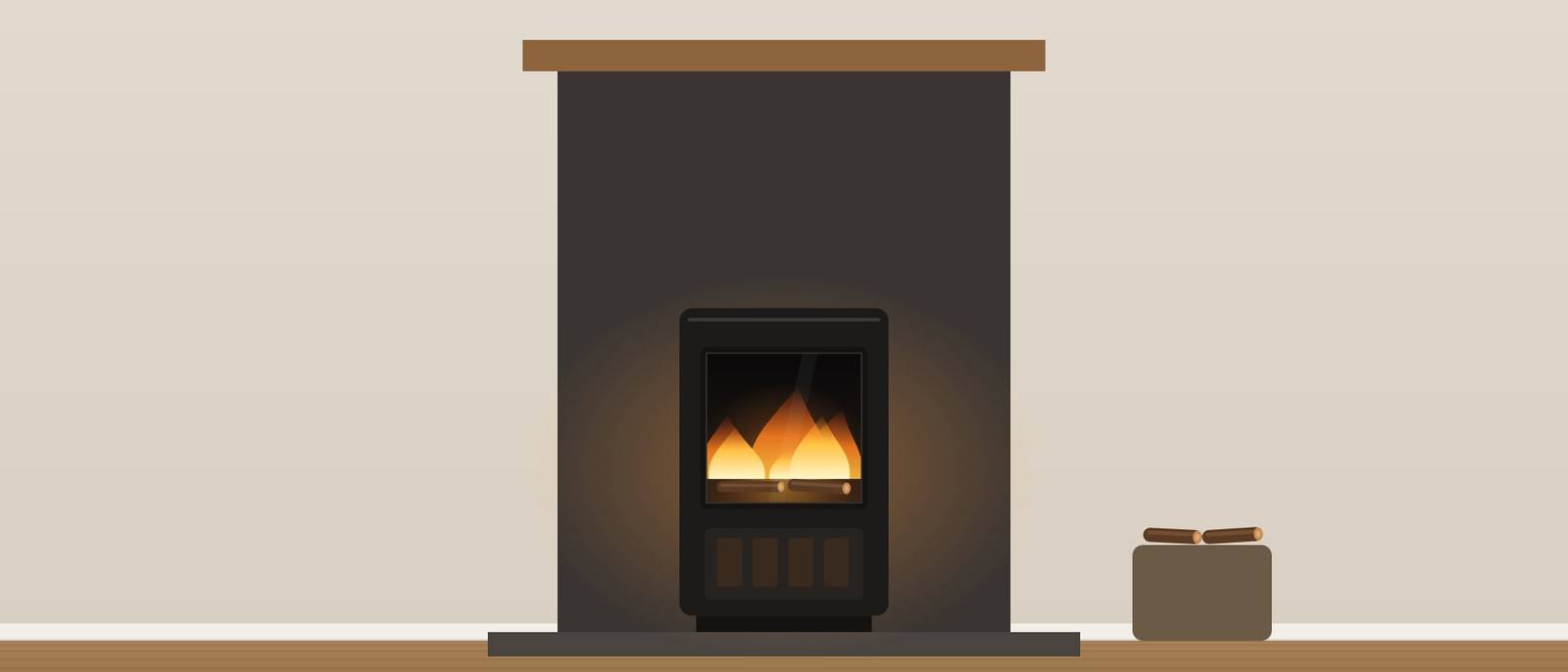
An electric stove is a heater dressed as a wood burner. You get the cast iron shape, the glowing log bed and a door window, but no flue, no ash and no fuel to store. It plugs into a socket, gives up to about 2 kW of heat on most models, and can stand in a fireplace recess, on a hearth or in a corner. This guide covers the choices that matter: style, size, heat, flame effect, where to put it and what it costs to run.
Electric stove or wood burner?
The two look alike but are very different to own.
| Electric stove | Wood burner | |
|---|---|---|
| Flue or chimney | Not needed | Needed, lined and swept |
| Installation | Plug in | Installer, hearth and flue to building regulations |
| Fuel | Electricity | Dry wood or approved fuel |
| Heat | Usually up to about 2 kW | Often much more |
| Ash and cleaning | None | Regular |
| Can be moved | Yes | No |
| Flame | Flame effect | Real fire |
If you want the most heat and a real fire, a wood burner wins. If you want the look and gentle heat with no building work, smoke or fuel, an electric stove makes more sense, especially in flats and homes without a working chimney.
Traditional or contemporary?
Traditional stoves have a box body on short legs, a top plate, and a door with one or two glass panes. Many have a cast iron look with details such as a door handle or a decorative vent. They suit period homes, cottages and fireplace recesses with a wooden beam.
Contemporary stoves are taller and plainer, often with a single large window and a log store look underneath. They suit modern rooms, open-plan spaces and corners.
There are also inset or cassette style stoves, which sit partly inside a fireplace opening with only the front showing. They are closer to inset fires than to freestanding stoves.
Measuring for an electric stove
Measure three spaces:
- The recess or spot where it will stand. Width, height and depth. Allow the clearance the manual asks for at the sides, back and top, and a little more for looks. A stove squeezed tight into a recess looks wrong even if it fits.
- The hearth or floor in front. Leave room so the heat outlet is not blowing straight into a rug or sofa. Electrical Safety First suggests keeping heaters at least one metre from combustible materials.
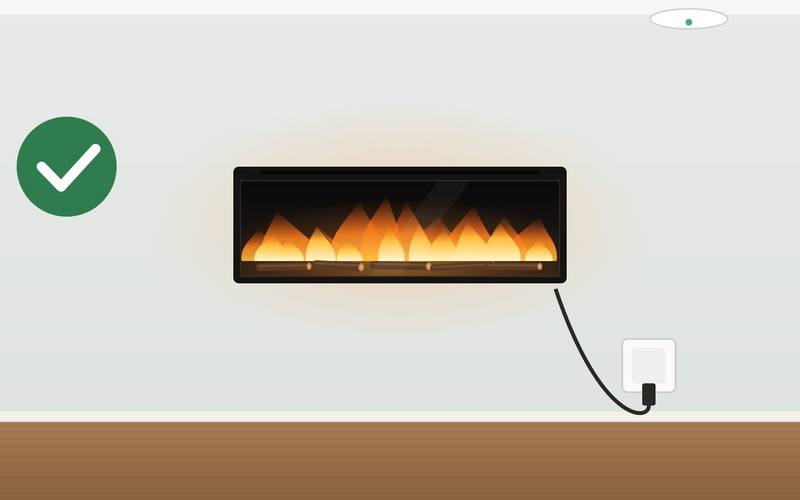
- The route to the socket. The lead needs to reach a wall socket without stretching, and without an extension lead.
Then check the stove's height against anything above it, such as a beam or a mantel, and look at where the heat comes out.
Heat output
Most electric stoves have two heat settings, often about 1 kW and 2 kW, plus flames only. Using the common rule of room volume in cubic metres divided by 14:
- A 3 x 3 m room with a 2.4 m ceiling needs about 1.5 kW, so a 2 kW stove can heat it alone.
- A 4 x 4 m room with a 2.4 m ceiling needs about 2.7 kW, so a 2 kW stove works as top-up heat.
Our guide to heat output and room size explains the rule and the adjustments for insulation.
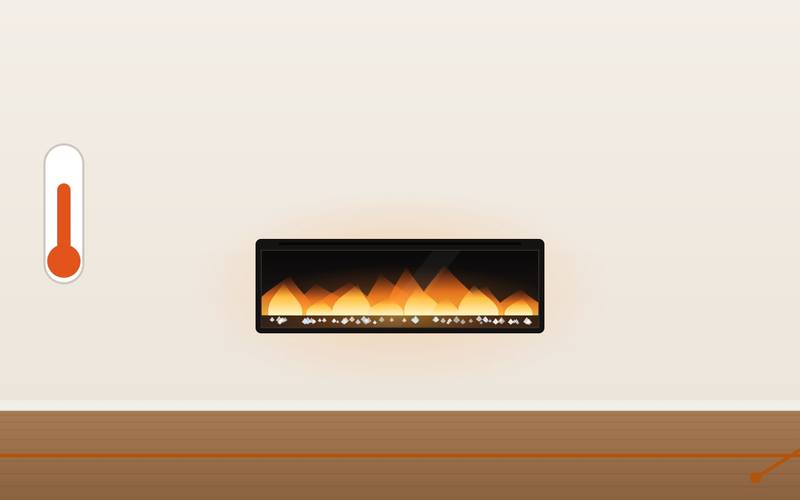
Look for a thermostat and a timer. Without them, the stove runs on full until you switch it off.
Flame effects in stoves
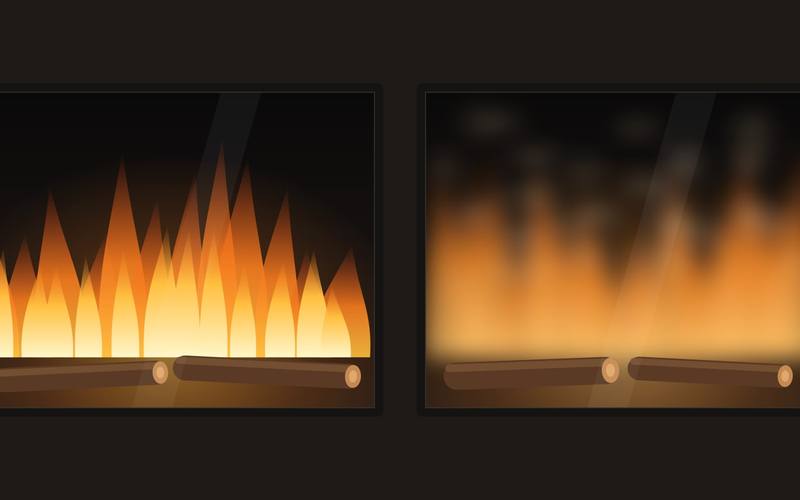
Most electric stoves use LED flames over a moulded log set. Better ones add a glowing ember bed and let you change flame brightness and speed. Some use a turning reflector for flicker. A few higher-end stoves use water vapour, where LEDs light a fine cool mist rising through the logs, which looks more three dimensional but needs a water tank refilling.
The size of the window matters: a large window shows more of the flame effect and makes the stove look like it is working harder. Our guide to flame effects compares the options.
Controls
Electric stoves are controlled in one of two ways, and some offer both:
- Controls on the stove, often hidden behind a small door or on the side. Simple and nothing to lose, but you have to get up.
- A remote control, which is handy if the stove sits in a deep recess or you want to change the flame brightness from the sofa.
Check that the heater and the flame effect have separate controls, that the thermostat lets you set a temperature rather than just high or low, and that the timer can switch the heater off on its own. If the stove is for a bedroom or a room you leave often, the timer matters more than any other feature.
Mistakes to avoid
- Buying for looks and forgetting the socket. A stove in the middle of a chimney breast with the lead running across the hearth to a socket on the far wall looks untidy and is a trip hazard.
- Choosing a stove too small for the recess. It looks lost. Lay a piece of card cut to the stove's size in the recess before you order.
- Expecting wood burner heat. A 2 kW electric stove will not heat a large, draughty room on its own.
- Leaving the chimney open. You lose warm air up the flue every hour the heating is on.
Hearth, fireplace and chimney
Hearth. An electric stove does not need a hearth for fire safety, because nothing burns. Most people still use one: a slate, granite or tiled slab under the stove looks right and protects the floor.
Fireplace recess. If you put a stove into an old fireplace, clean out the recess and check that the floor of it is level. Brick or stone backs look good lit by the flame effect.
Open chimney. An open flue pulls warm air out of the room and lets cold air and soot down. If you are not going to use the chimney, ask a chimney sweep or builder about capping it. A capped chimney usually still needs some ventilation so that it stays dry.
Decorative flue pipe. Some electric stoves come with a short pipe on top for the look. It is not connected to anything and does not need to go into the chimney.
Running cost
An electric stove costs the same as any other heater of the same power. Using the average Ofgem price cap unit rate for Direct Debit customers from 1 October to 31 December 2026, 26.32p per kWh:
- 2 kW: about 53p an hour.
- 1 kW: about 26p an hour.
- Flames only: usually under a penny an hour for LED effects.
With a thermostat, the heater switches off once the room is warm, so real costs are usually lower than the full-power figure. The running cost guide shows how to redo the sum with your own tariff.
Safety
- Plug straight into a wall socket, not an extension lead.
- Keep curtains, furniture and log baskets clear of the heat outlet.
- Do not leave the heater running while you are out or asleep; use the timer.
- Stand the stove on a level surface where it cannot be knocked over.
- Keep children and pets away from the heat outlet.
More in are electric fires safe?.
Checklist
- Traditional, contemporary or inset style?
- Measurements of the recess or space, plus the manual's clearances.
- A wall socket within reach of the lead.
- Heat output against your room size.
- Thermostat, timer and flames-only mode.
- Flame effect type and window size.
- Hearth or slab underneath, and a plan for any open chimney.
Our electric stoves section lists the stove types we are preparing, with the details we can already confirm.
Frequently asked questions
Do electric stoves give out real heat?
Yes. Most have a fan heater of up to about 2 kW with a lower setting around 1 kW. That is enough to heat a small or medium room on its own, and to top up a larger one. The flame effect can also run without heat.
Can I put an electric stove in a fireplace?
Yes, if the recess is big enough for the stove plus any clearance in the manual, and there is a socket within reach of the lead. If the chimney is open, consider having it capped with suitable ventilation, because an open flue lets warm air escape.
Do electric stoves need a flue pipe?
No. Nothing burns, so there is no smoke. Some electric stoves come with a short decorative flue pipe for the look, but it is not connected to anything.
Is an electric stove cheaper to run than a wood burner?
It depends on what you pay for wood and electricity, so there is no single answer. An electric stove costs its kW multiplied by your unit rate: about 53p an hour at 2 kW using the average Ofgem price cap unit rate for Direct Debit customers from 1 October to 31 December 2026, 26.32p per kWh.
Can an electric stove go on carpet?
Check the manual. Many people stand the stove on a hearth, a slate slab or a tiled plinth. It looks right, protects the floor and keeps the heat outlet clear of the carpet pile.