Explainer
Electric fire flame effects explained: LED, water vapour and more
How electric fire flame effects work: reflector flames, LED flames, water vapour mist, fuel beds and colour settings, and what makes the flames look real.
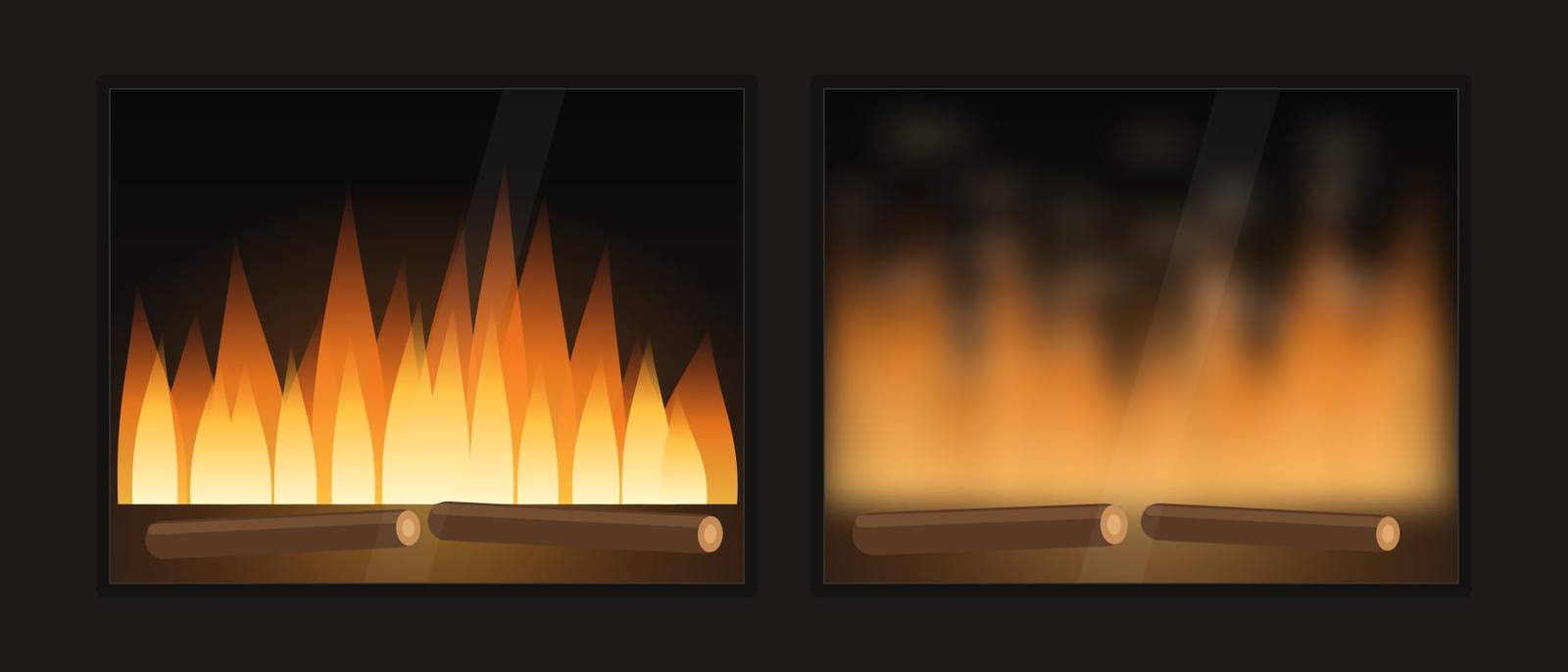
Every electric fire has two separate jobs: a heater that warms the room and a flame effect that looks like a fire. The heater is usually a simple fan heater of up to about 2 kW. The flame effect is where fires differ most, and it is the part you look at every evening. This guide explains the main systems in plain terms, without brand names, so you can compare fires on what they do rather than what they are called.
The three main families
| Flame effect | How it works | Look | Upkeep |
|---|---|---|---|
| Reflector flames | A light shines on a turning reflector, casting moving light onto a screen | Classic, two dimensional | None |
| LED flames | LEDs and screens or reflectors create flames, often in several colours | Bright, crisp, many settings | None |
| Water vapour | LEDs light a fine cool mist that rises through the fuel bed | Soft, three dimensional | Refill water, clean parts |
Many fires mix ideas from more than one family, for example LEDs with a turning reflector, so treat these as broad groups.
Reflector flames
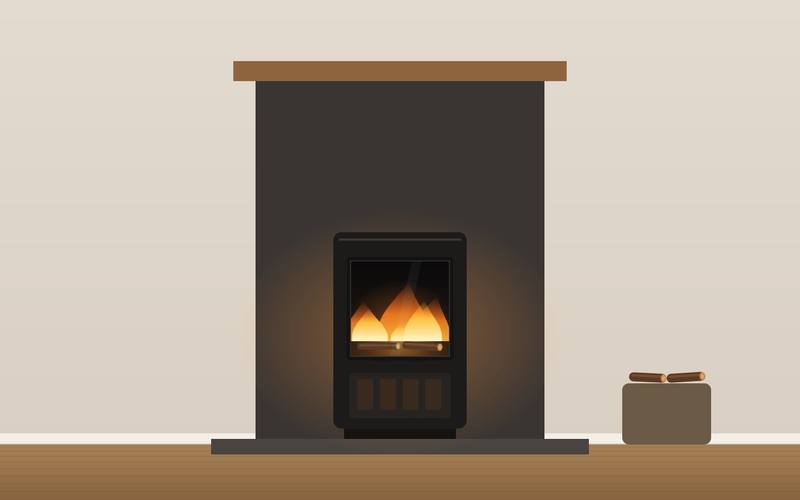
The oldest common system uses a light source and a slowly turning rod or drum covered in reflective strips. The moving reflections are projected onto a shaped screen behind a fuel bed, which makes the light flicker like flames. Early versions used ordinary bulbs; many current versions use LEDs as the light source.
It is simple and reliable and needs no upkeep. The flames are flat, though: they are light on a screen, so from the side they lose depth. You will mostly find this effect on traditional inset fires and stoves.
LED flames
Most modern wall mounted and media wall fires use LED flame effects. LEDs are bright, use little power and can change colour. Makers combine them in different ways: rows of LEDs behind a printed or textured screen, LEDs aimed at a moving reflector, or several layers of screens one behind another to suggest depth.
What LED fires do well
- Brightness. They look good in a lit room, not only in the dark.
- Settings. Many let you choose flame colour, brightness and speed, and light the fuel bed separately. Some offer blue or purple flames; most people settle on orange for the evening.
- Low running cost. The flame effect alone uses a small fraction of the heater's power.
- No upkeep. Nothing to refill or clean beyond dusting the glass.
Where they can fall short
- On cheaper fires the flames can repeat in an obvious pattern or look like a flat band of light.
- From a sharp angle the depth disappears, because the flames sit on a screen.
Water vapour flames
Water vapour fires create real moving "flames" in the air. A small ultrasonic device vibrates water in a tank and turns it into a very fine, cool mist. A gentle fan lifts the mist up through the fuel bed, and LEDs below light it orange and yellow. Because the mist moves in three dimensions, the flames look different from every angle and seem to rise out of the logs, sometimes with a smoky look at the top.
What they do well
- Depth. The flames are a physical cloud, not light on a screen, so they look convincing from the side too.
- Movement. The mist never repeats exactly.
- Cool flames. The mist is made by vibration, not boiling, so it is not steam. The heat comes from a separate heater.
What to know before you buy
- Water tank. You need to top it up. How often depends on the size of the tank and how long the flames run.
- Water type and cleaning. Minerals in the water can leave deposits on the parts that make the mist. Some makers recommend distilled or de-ionised water, particularly in hard water areas. Follow the manual, and expect to clean the tank and mist parts from time to time.
- Moisture. The mist adds a little moisture to the room. Keep things that dislike it, such as a TV or pictures, away from the plume, and follow the manual's clearances.
- Price. Water vapour fires generally cost more than LED fires of a similar size.
- Power. The mist system uses a little more electricity than LEDs alone, but still far less than the heater.
Fuel beds
The fuel bed is the bit the flames appear to come out of. It changes the style more than you might think.
- Logs: traditional, cosy, the closest look to a wood burner. Common in stoves and suites.
- Pebbles: smooth stones, modern but soft.
- Crystals: clear or tinted glass pieces that catch the light, the most contemporary look.
- Coal: a classic look for inset fires in period fireplaces, often with a glowing ember bed.
- Driftwood: pale, natural, a middle ground between logs and pebbles.
Many wall mounted and media wall fires come with two or more fuel beds, so you can change the style later. A lit ember bed, where LEDs make the bottom of the fuel bed glow, adds a lot of realism for very little power.
What makes a flame effect look real
When you compare fires in person or on video, look at these things rather than the marketing names:
- Flame height compared with the window. Flames that fill most of the glass look stronger than a thin band at the bottom.
- Variation. Real flames are uneven. Watch for a repeating pattern over a minute or so.
- Depth. A deeper firebox, layered screens or real mist all help. Look from the side as well as straight on.
- Colour. A warm orange with yellow at the base looks most like a real fire. Check that you can set it.
- Ember glow. A fuel bed that glows from below looks more convincing than one lit only from above.
- Brightness control. You want bright flames in daylight and a dimmer, softer setting at night.
- Reflections. Dark glass reflects the room. Fires with glass that reflects less, or a lower light level in the room, show the flames better.
- Sound. Some fires add a crackling sound. Try it before you rely on it; some people love it, others switch it off.
Flames without heat
Almost every electric fire can run the flames without the heater, which is ideal for mild evenings. The cost is very low: as an example, a flame effect drawing 30 W costs under 1p an hour at the average Ofgem price cap unit rate for Direct Debit customers from 1 October to 31 December 2026, 26.32p per kWh. Our running cost guide shows the full sums.
Which flame effect should you choose?
- You want the most realistic look and do not mind refilling a tank: water vapour.
- You want bright flames, colour options and no upkeep: LED.
- You want a classic inset fire for a period fireplace: reflector or LED with a coal or log bed.
- The fire goes in a media wall under a TV: LED is the common choice; if you want a water vapour fire there, check the clearance to the TV with extra care because of the moisture.
Whichever you choose, the heater behind it works the same way. For sizes and recesses, read our media wall fire buying guide.
Frequently asked questions
What is the most realistic flame effect for an electric fire?
Water vapour fires, where LEDs light a fine cool mist, usually look the most three dimensional because the flames have real depth and movement. Good LED fires with a deep firebox, a lit fuel bed and adjustable flame speed can also look convincing, especially from a normal viewing distance.
Is the mist in a water vapour fire hot?
No. The mist is made by vibration, not by boiling, so it is cool. The heat comes from a separate heater. The mist is still water, so do not put anything that dislikes moisture right above the fire.
Do water vapour fires need refilling?
Yes. They have a water tank that needs topping up, and parts that need cleaning from time to time. Follow the manual for the type of water to use; some makers recommend distilled or de-ionised water, particularly in hard water areas.
Can I turn the flame effect off and just have heat?
On many fires the flames and heater are controlled separately, but some only allow heat with the flames on. If you want heat without flames, check the manual.
Do LED flame effects use much electricity?
No. LED flame effects use a small fraction of the power of the heater. The specification often gives the power in flame only mode; multiply it by your unit rate to get the cost per hour.